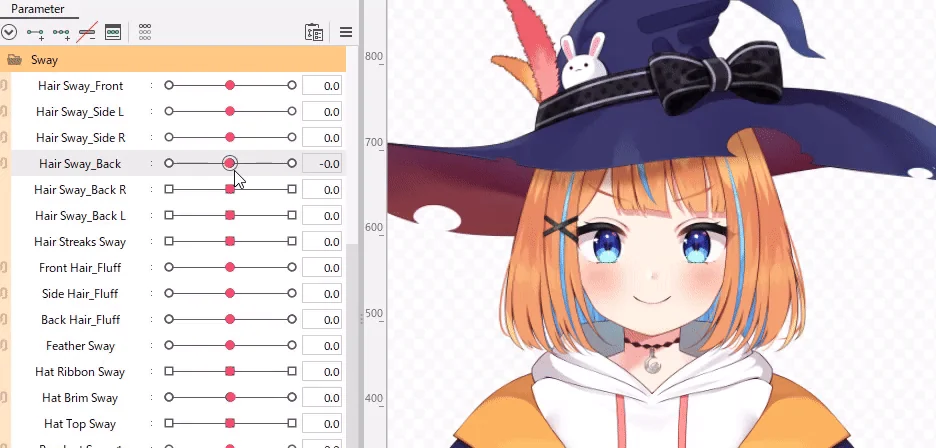
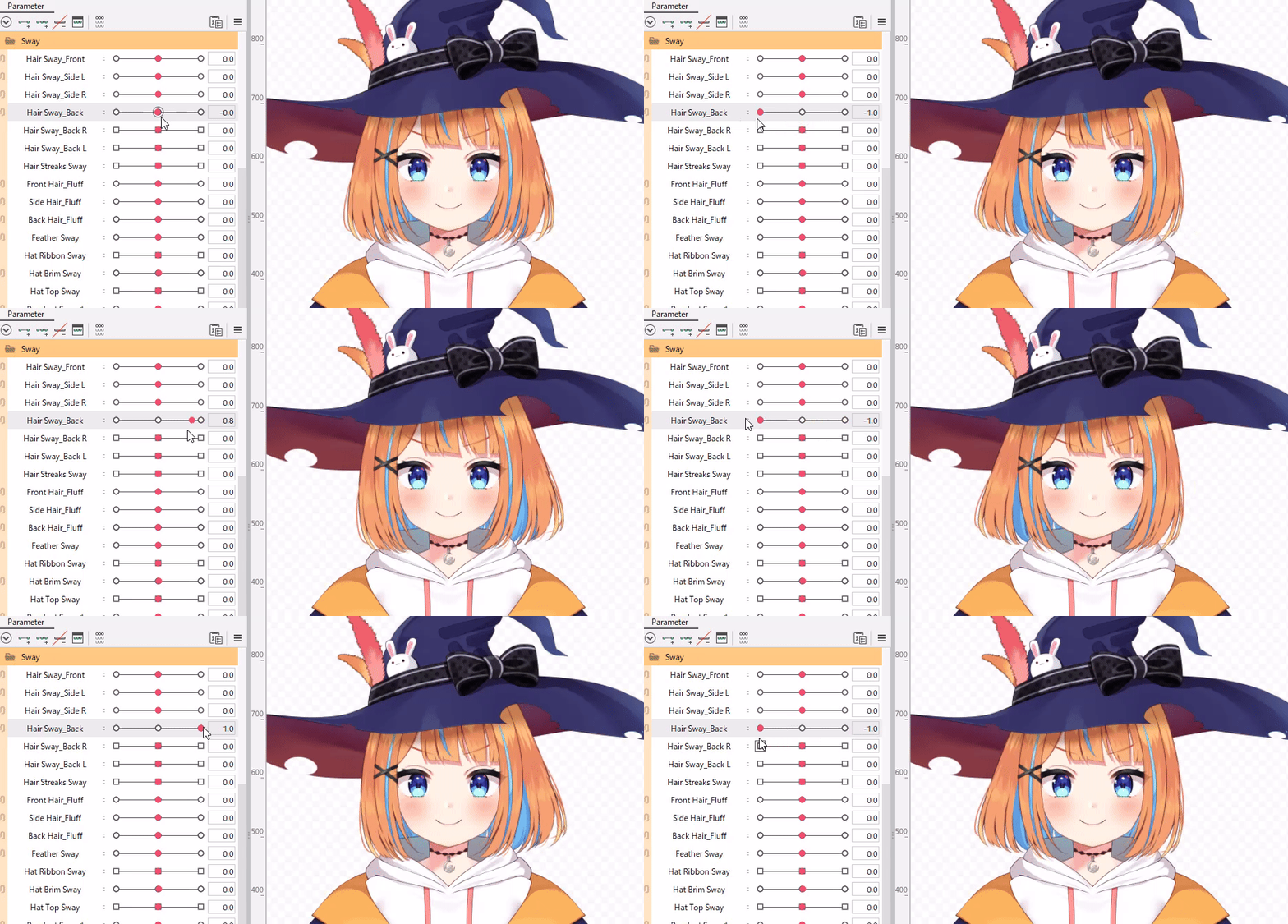
The setup
Cubism Editor is Live2D's own rigging tool for turning a layered 2D illustration into a parameterized puppet, and its manual, retrieved 16 September 2026, documents a dedicated physics system for hair, clothing and other secondary motion. The relevant page, titled How to Set Up Physics, is a living document maintained by Live2D rather than a dated release, and a companion page titled About Physics explains the same feature conceptually. Together they describe how a rigger tells the software which parts of a model should sway on their own, without a keyframe for every strand of hair.
What the documents show
The setup manual states that physics runs on an input-output chain: an input parameter such as Angle X or Body Rotation Z is read, a physical-model calculation determines how far and how fast a swing should travel, and the result is written to output parameters. Duration controls swing speed, ease of swinging, recommended in a range of 0.7 to 0.99, sets the amount of swing, and reaction time and speed of convergence govern responsiveness and how quickly motion settles. The conceptual page adds a pendulum metaphor: the input sets up the part that suspends the thread, the physical-model settings set up the weight, and input normalization converts each model's differing parameter ranges into one standard calculation so gravity-like motion behaves consistently across different rigs. Neither page claims a result looks natural; both describe mechanism only.
The craft
In practice, a rigger picks a driving parameter already used for head or body motion, assigns it as input, attaches the deformer that moves hair or a skirt as output, and watches the documented Output Maximum percentage rather than guessing. The manual's own Increase Output controls exist because a first pass usually swings too little or too much, and adjusting duration and ease of swinging is the documented way to correct that before publishing a model rather than after going live on stream.
Keeping the creator in control
Because physics parameters keep moving even when a performer is otherwise still, a rigger who understands this input-output structure decides how much autonomy a model's hair or costume gets during unscripted moments on stream. This is an editorial point beyond the manual itself: treating physics settings as a deliberate craft decision, not a default preset, keeps a model's read consistent with what its creator intends, rather than leaving idle motion to whatever a starting template produces.
- Which parameters currently drive your model's physics, and did you choose them deliberately?
- Have you checked Output Maximum since the last time you edited a physics group?
- Does your idle sway still look right at the extremes of your tracked expressions?
A convincing idle pose is not an accident of software defaults; Cubism's own documentation frames it as a tuned relationship between a chosen input and a physical model, and that framing is worth carrying into every new rig.
Sources & reading trail
States the input, physical-model and output settings, including the 0.7-0.99 ease-of-swinging range, and the Output Maximum tuning workflow.
Source published: Not established · Retrieved: 16 September 2026
States the pendulum concept, input normalization and the real-time hair-sway purpose of physics settings.
Source published: Not established · Retrieved: 16 September 2026
Documentation, agency filings and platform records establish the entry; the craft reading is VTubing editorial analysis. This retrospective draft does not imply the site published on the event date.