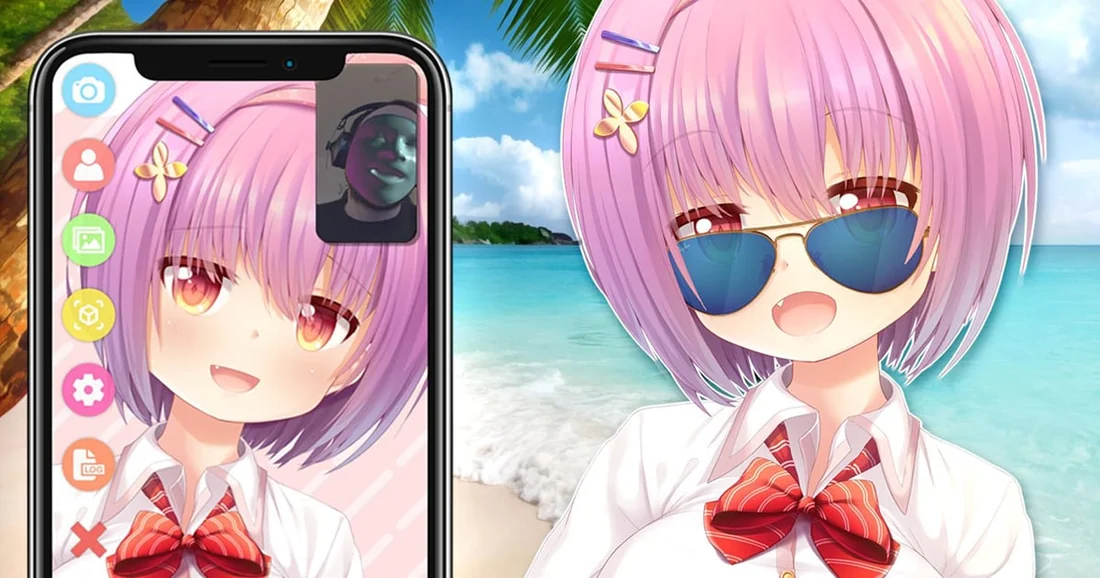
The setup
DenchiSoft is the developer of VTube Studio, the Live2D-focused performance app described on its own official website as software for Virtual YouTubers that drives a model using webcam or iPhone face tracking. Its Privacy Policy page, as retrieved on 16 September 2026, opens with a summary rather than legal boilerplate: the website does not log or share any personal information, and the apps do not collect any user information, stated in the document's own emphasis.
What the documents show
The privacy page goes further than the summary and specifies what the iOS app actually does with tracking data: it uses Apple's TrueDepth camera system to collect face angle and facial expression information, states that no other data is collected from face tracking and this data is not stored, and that the data is not shared with DenchiSoft or any third party. The one documented exception is the 3rd Party PC Clients feature, which sends face-angle and expression values only to an IP address on the user's own local network that the user has entered manually; the document is explicit that this data is not stored on your device either, and that any other app requesting it must already be running on that same local network. The homepage separately confirms the underlying tracking method, webcam tracking via the open-source OpenSeeFace project or a connected phone, which the privacy page's technical description matches.
The craft
For a performer deciding whether to enable a feature, the privacy page gives a concrete basis for two setup decisions: streaming face data to a second PC on the same network for a co-streaming setup is documented as local-network-only traffic, not a cloud upload, and the built-in screen recorder requires an explicit permission prompt each time, mirroring the iPhone's native recorder. Avatars loaded into the app stay within the app, meaning the model file itself is not read or transmitted by DenchiSoft during normal operation.
Keeping the creator in control
A common creator safety question, whether the software behind their face is watching them, has a documented answer here: no face image, video or model file leaves the device except across a local network the user configures themselves. This is a stronger, more specific claim than a generic privacy policy makes, and it is worth reading the source page directly rather than assuming every tracking tool handles a webcam feed the same way, since the document does not speak for any other application's practices.
- Is the 3rd Party PC Clients feature active, and if so, is the destination IP address actually trusted?
- Does the setup rely on screen recording, and has the corresponding permission prompt been confirmed each time it is expected?
- Has this specific privacy page been checked recently, rather than relying on a past reading of it?
DenchiSoft's own documentation, not fan reassurance, is the correct place to verify what a face-tracking tool does with a performer's face, and on its current text VTube Studio's answer is that almost nothing leaves the machine at all.
Sources & reading trail
States VTube Studio apps collect no user information, that face-tracking data is not stored, and that the only data leaving the device is local-network traffic for the 3rd Party PC Clients feature.
Source published: Not established · Retrieved: 16 September 2026
Confirms VTube Studio's tracking methods, webcam tracking via OpenSeeFace or a connected phone, matching the privacy page's technical description.
Source published: Not established · Retrieved: 16 September 2026
Documentation, agency filings and platform records establish the entry; the craft reading is VTubing editorial analysis. This retrospective draft does not imply the site published on the event date.