The setup
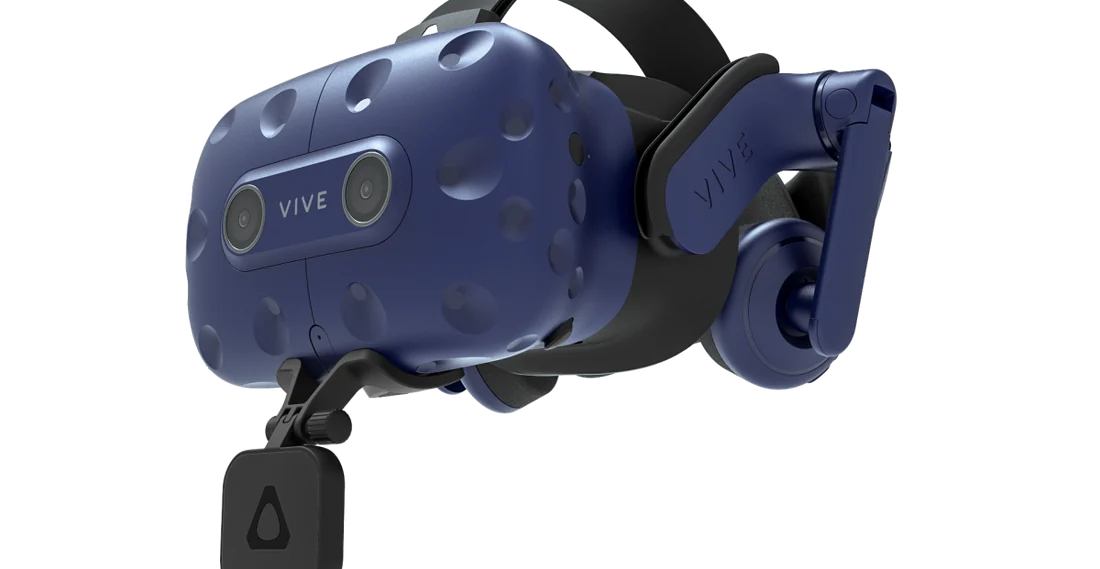
In March 2021, HTC brought a camera-based alternative to phone-based facial tracking to its Vive Pro headset line. The Verge reported on 10 March 2021 that 'HTC has announced a facial tracker for the Vive Pro VR headset, which is capable of capturing lip and jaw motions,' priced at $129.99, with HTC saying the product 'has launched in global markets' and would reach the US on 24 March. HTC's currently listed successor product, Facial Tracker for VIVE Focus Series, documents the same underlying idea updated for newer headsets.
What the documents show
The Verge's reporting states the original tracker 'supports 38 distinct facial movements' and 'works with HTC's Vive Pro,' attaching via 'two cameras and an infrared illuminator' rather than requiring a phone. HTC's current documentation for the Focus-series version states an updated figure of '38 blend shapes across your lips, teeth, tongue, jaw, cheeks, and chin at 60 Hz,' a 151-degree diagonal field of view, and USB-C connectivity, with SDK support for Unity, Unreal Engine, and native development. The headset target has changed since 2021 - the current page lists VIVE Focus Vision and Focus 3, not the original Vive Pro - which is a documented lineup change, not a correction of the 2021 device's own specifications.
The craft
Because the tracker attaches directly to a VR headset rather than sitting on a desk or phone stand, it is built for creators who are already performing inside VR, where a phone-based rig pointed at the face is impractical. The Verge's report frames the trade-off HTC itself acknowledged: earlier lip-sync tools estimated mouth movement from a microphone's audio, while 'the new facial tracker can directly capture how their faces move, reflecting expressions like smiles' the audio-only method could not infer. HTC's current documentation states it explicitly supports both standalone and PC VR versions of VRChat, the platform most of this hardware is bought for.
Keeping the creator in control
A headset-mounted camera keeps the captured image close to the face and, per HTC's own current documentation, streams blend-shape coefficients rather than raw video to the receiving engine - editorially, a narrower data footprint than a webcam pointed at a creator's whole room. Compatibility remained the real constraint documented across both eras: the 2021 device tied to Vive Pro, and the current one to Focus Vision and Focus 3, so a creator's headset choice determines whether this specific hardware path is available at all.
- Does the headset a creator already owns appear on HTC's current compatibility list for this tracker?
- Is 60 Hz, 38-blend-shape capture enough resolution for the character's rig, or does it need supplementing?
- What does the receiving software do with blend-shape data once it leaves the tracker - store it, discard it, or forward it?
Across five years the specific hardware target moved from Vive Pro to the Focus series, but HTC's own documentation keeps the same core claim: a headset-mounted camera reading 38 facial blend shapes, an alternative path to phone-based ARKit tracking that this site covers separately.
Sources & reading trail
Reputable original reporting, labelled as such, documenting the announcement date, price, 38-movement tracking, and Vive Pro compatibility.
Source published: 10 March 2021 · Retrieved: 16 September 2026
HTC's current documentation for the successor product: 38 blend shapes at 60 Hz, field of view, SDK support, and current headset compatibility.
Source published: Not established · Retrieved: 16 September 2026
Documentation, agency filings and platform records establish the entry; the craft reading is VTubing editorial analysis. This retrospective draft does not imply the site published on the event date.