The setup
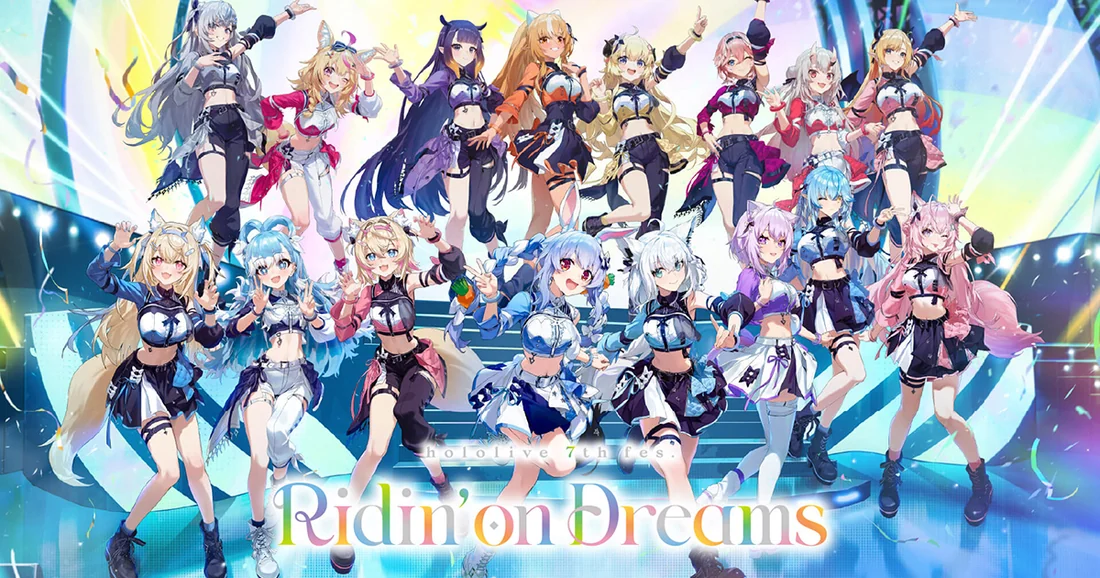
In March 2026, Cover Corp's hololive talent group held its flagship annual concert, hololive 7th fes. Ridin' on Dreams. On 10 July 2026 the company published a news release announcing an after-screening of that concert in more than fifty Japanese cinemas, and stood up a dedicated after-screening event page to carry the ticketing detail. This entry documents what that official page states about price, timing and access, not the concert's attendance or revenue.
What the documents show
The event page states two ticket prices: a standard ticket at 4,500 yen and a goods-bundled ticket at 5,200 yen including a streamer and sticker set, the bundle reserved for the first lottery phase only. It lists four screening dates across two consecutive weekends, 29 to 30 August and 5 to 6 September 2026, each beginning at 15:00, with limited bonus comment footage from two of the concert's performers shown at each date. The news release corroborates the same prices and dates and clarifies that this is a theatrical rebroadcast of the original concert footage, not a new performance. Sales ran through a Lawson Ticket lottery in two phases before moving to first-come sales and same-day theater box-office sales, a schedule both documents describe consistently.
The craft
An after-screening is a distribution decision as much as a ticketing one: rather than a global stream, the company chose a theater network and a ticketing vendor already built for lottery-style high-demand sales, then layered bonus talent footage into the same infrastructure the original tickets ran through. For a production team, the lesson generalizes beyond VTubing: a live-event ticketing pattern built for a single physical concert can be reused for a delayed, replicated screening at scale, without inventing new sales tooling.
Keeping the creator in control
The page states plainly that purchased tickets cannot be refunded or exchanged for the buyer's convenience, and separately, that unauthorized resale is prohibited and that resold tickets can be invalidated. It also bars recording of any kind inside the theater. Together these are the company's own stated mechanisms for keeping control of how, where and by whom the performance is watched, distinct from an open livestream link that can be copied endlessly. This is an editorial reading of what the page enforces, not a claim about how effectively it is policed.
- Does a comparable event page state its resale and refund policy as clearly as this one does?
- What made a theatrical after-screening preferable here to a paid online replay?
- Which access rules, no recording, no resale, protect the performance rather than just the venue?
Read side by side, the announcement and the event page show a company documenting a secondary release of an already-performed concert with the same rigor as an original ticket sale, rather than treating the after-screening as an afterthought.
Sources & reading trail
States the after-screening's ticket prices (4,500 / 5,200 yen), four screening dates, sales schedule, and no-refund and no-resale rules, as published.
Source published: Not established · Retrieved: 16 September 2026
Cover Corp's own news release announcing the after-screening, naming the original March 2026 concert and confirming the same ticket prices, dates and venue count.
Source published: 10 July 2026 · Retrieved: 16 September 2026
Documentation, agency filings and platform records establish the entry; the craft reading is VTubing editorial analysis. This retrospective draft does not imply the site published on the event date.